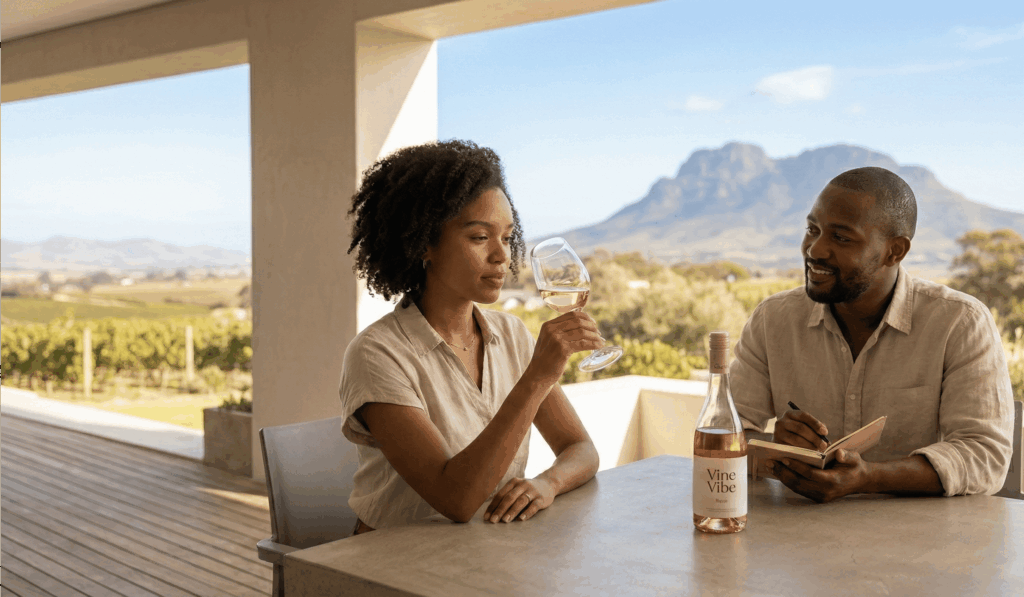
We’ve all been there: standing in a tasting room in Stellenbosch or Constantia, watching a wine professional swirl their glass, take a sip, and confidently announce notes of “fynbos, wet slate, and wild plums.”
If you’ve ever wondered, “How do they do that?”, and more importantly, “Can I do that too?”, the answer is a resounding yes.At Vine Vibe, we believe that wine shouldn’t be intimidating. Tasting isn’t a “gift” you’re born with; it’s a skill you build, much like learning to drive or cook. Here is how you can sharpen your senses and deepen your enjoyment of every bottle.
1. It’s More Than Just Taste
Did you know your tongue can only detect five basic building blocks: sweet, sour, salty, bitter, and umami? Everything else you “taste”, the vanilla in a Chardonnay or the spice in a Syrah—is actually coming from your nose.
To train your palate, you have to engage all your senses:
- Sight: Is the wine a pale straw or a deep gold?
- Smell: This is the most important part. Take your time to sniff before you sip.
- Touch: Think about “mouthfeel.” Is the wine light and zesty like a cool-climate Sauvignon Blanc, or is it velvety and heavy like a Stellenbosch Cabernet Sauvignon?
Pro Tip: Next time you’re in the kitchen, hold your nose and eat a piece of fruit. Then, let go. You’ll instantly realize how much of the “flavor” was actually “aroma.”
2. Build Your “Flavour Library”
Expert tasters have a mental “filing cabinet” of smells and tastes. You can build yours without even opening a bottle.
- The Spice Test: Smell the spices in your pantry.
- The Garden Walk: Next time you’re hiking in the mountains, crush a bit of fynbos or wild rosemary between your fingers.
Fruit Comparisons: When you buy plums or peaches at the local market, take a second to really notice their scent.
The more you consciously identify these smells in daily life, the easier it will be to find them in your glass of Vine Vibe favorites.
3. Compare, Compare, Compare
The fastest way to learn is by side-by-side comparison. It’s hard to describe a wine in isolation, but it’s easy to describe it relative to something else.
Try this: Open a crisp Breedekloof Chenin Blanc next to a Stellenbosch Chenin Blanc that has seen some oak. The difference in texture and aroma will be night and day, and suddenly, “wooded” vs. “unwooded” isn’t just a label, it’s a sensation.
4. Use a Framework
At Vine Vibe, we often look to the WSET (Wine & Spirit Education Trust) approach. Instead of just saying “this is nice,” try to move from general to specific:
- General: “It smells like fruit.”
- Specific: “It smells like citrus.”
- Expert: “It smells like grilled lemon peel.”
5. Mind the Environment
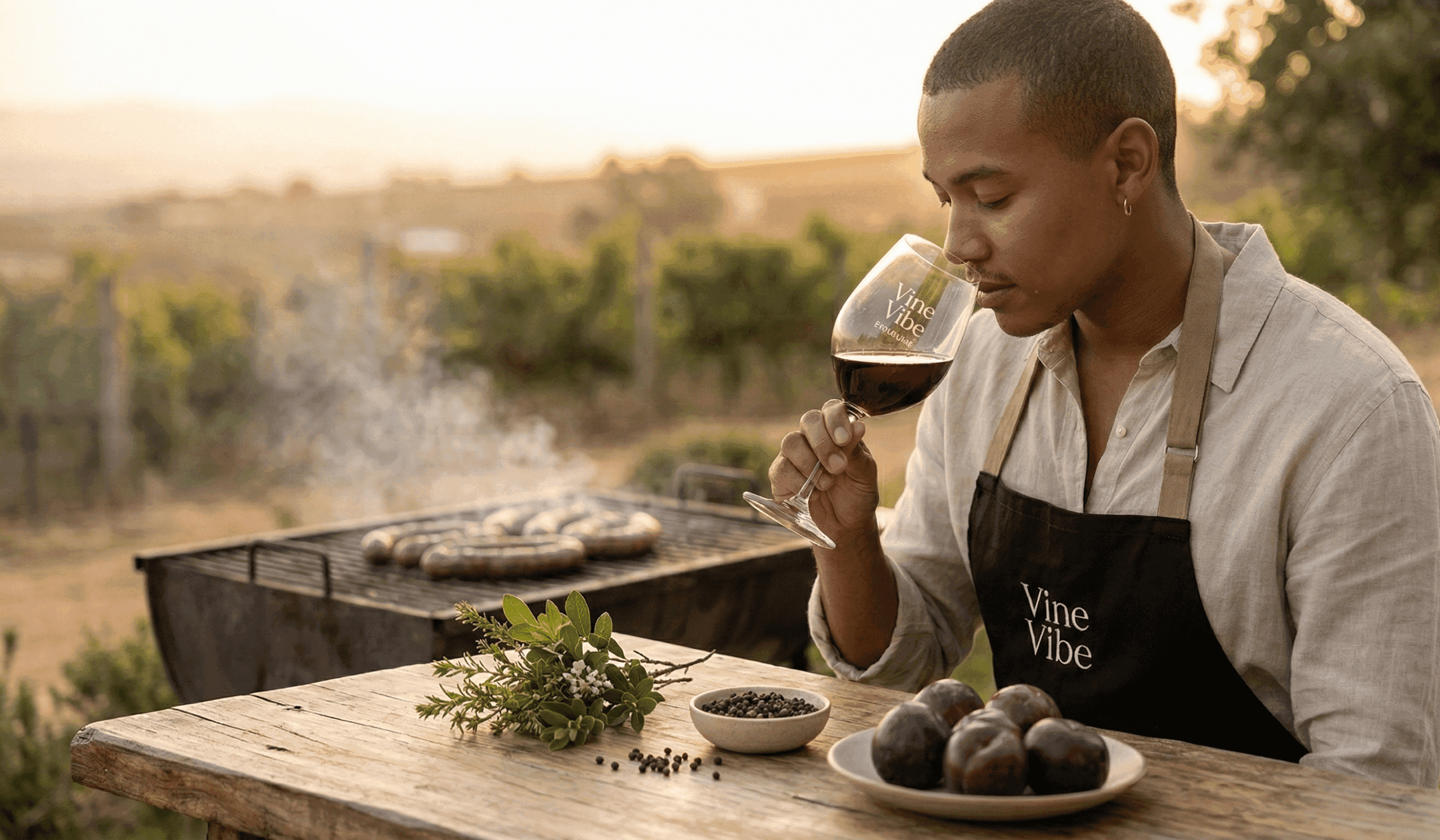
Your palate is sensitive. If you’re at a braai with smoke drifting over your glass, or if you’ve just brushed your teeth, the wine will taste different. Even the shape of your glass matters! A wide-bowled glass allows the aromas of a Pinot Noir to “breathe,” while a smaller glass might keep them trapped.
The Vine Vibe Takeaway
Training your palate isn’t about being “fancy”, it’s about presence. It’s about slowing down and truly experiencing the liquid in your glass. The next time you pour a glass of South Africa’s finest, don’t just drink it. Look at it, smell it, and think about how it feels.
Your journey to becoming a pro-taster starts with the very next swirl, sniff and sip.
Cheers to the journey!